AI Voice Cloning Scams: How Deepfake Audio Is Being Used to Defraud Indian Businesses
AI voice cloning scams now let fraudsters convincingly impersonate a director's actual voice, not just their WhatsApp photo — here's how the scam works and how to stop it.


💡 In Simple Terms (For Beginners)
Scammers can now clone someone's voice from just a few seconds of audio (like a YouTube interview or a voicemail) and use it to call your employees, sounding exactly like your boss, asking for an urgent money transfer.
- AI voice cloning needs only a short public audio sample to produce a convincing fake of someone's voice.
- It's the audio evolution of the WhatsApp photo impersonation scam, not a separate threat category.
- The same callback-verification rule that stops WhatsApp impersonation stops this too — voice alone should never authorise a payment.
THREAT INTEL · September 7, 2026 · 7 min read · By Hardik Patel
How do AI voice cloning scams targeting Indian businesses work? A fraudster feeds a short public audio clip of a real executive's voice — a YouTube interview, a webinar recording, a voicemail greeting — into a voice-cloning tool, then uses the cloned voice in a live or recorded call to instruct an employee to make an urgent payment.
How the Scam Actually Works
A fraudster only needs a short public audio sample — often as little as a few seconds — of a target's real voice to generate a convincing clone using widely available AI voice tools, then uses that cloned voice in a phone call to instruct an employee to transfer money or share sensitive information.
The setup mirrors WhatsApp impersonation almost exactly: research the target's public appearances (interviews, webinars, conference talks, even voicemail greetings), clone the voice, then call a finance or accounts employee with an urgent, plausible request — a wire transfer, a confidential acquisition payment, a vendor advance — while sounding exactly like the person the employee already trusts.
Why This Is the Natural Next Step After WhatsApp Impersonation
Voice cloning scams work for the same underlying reason WhatsApp photo impersonation does — employees are trained to trust what they recognise, and a familiar voice is an even stronger trust signal than a familiar photo. The technology has simply moved the same social-engineering pattern to a new channel.
Businesses that have already trained staff against WhatsApp impersonation are better positioned here, because the actual defence — never authorise a payment on a single unverified channel, regardless of how convincing it sounds or looks — is identical across both.
How to Stop It
No payment or sensitive disclosure should move on a voice instruction alone — every request, regardless of how familiar the caller sounds, needs verification through a second, pre-established channel before action is taken.
- Treat an urgent voice-only payment request as a trigger for verification, not a reason to move faster.
- Call back on a number you already have saved — never a number the caller provides, and never simply call back the same number that just called you.
- Use a pre-agreed verification phrase or process for high-value requests, something a cloned voice alone can't reproduce.
- Apply dual approval above a set threshold, so no single voice instruction can authorise a large transfer alone.
Key Takeaways
- AI voice cloning needs only a short public sample to produce a convincing fake.
- This is the same social-engineering pattern as WhatsApp impersonation, moved to a new channel.
- Callback verification through a known, saved number defeats this regardless of how convincing the cloned voice is.
- A pre-agreed verification phrase adds a layer a cloned voice genuinely cannot pass.
Frequently Asked Questions
Q: How much audio does a scammer actually need to clone a voice?
A: Often just a few seconds to a couple of minutes of clear audio — a public talk, interview, or even a voicemail greeting can be enough source material for current voice-cloning tools.
Q: Can this happen over a live phone call, or only pre-recorded messages?
A: Both — some tools now support real-time voice conversion during a live call, not just pre-recorded clips, which makes call-based verification alone insufficient.
Q: Is this related to the WhatsApp impersonation scam already covered on this blog?
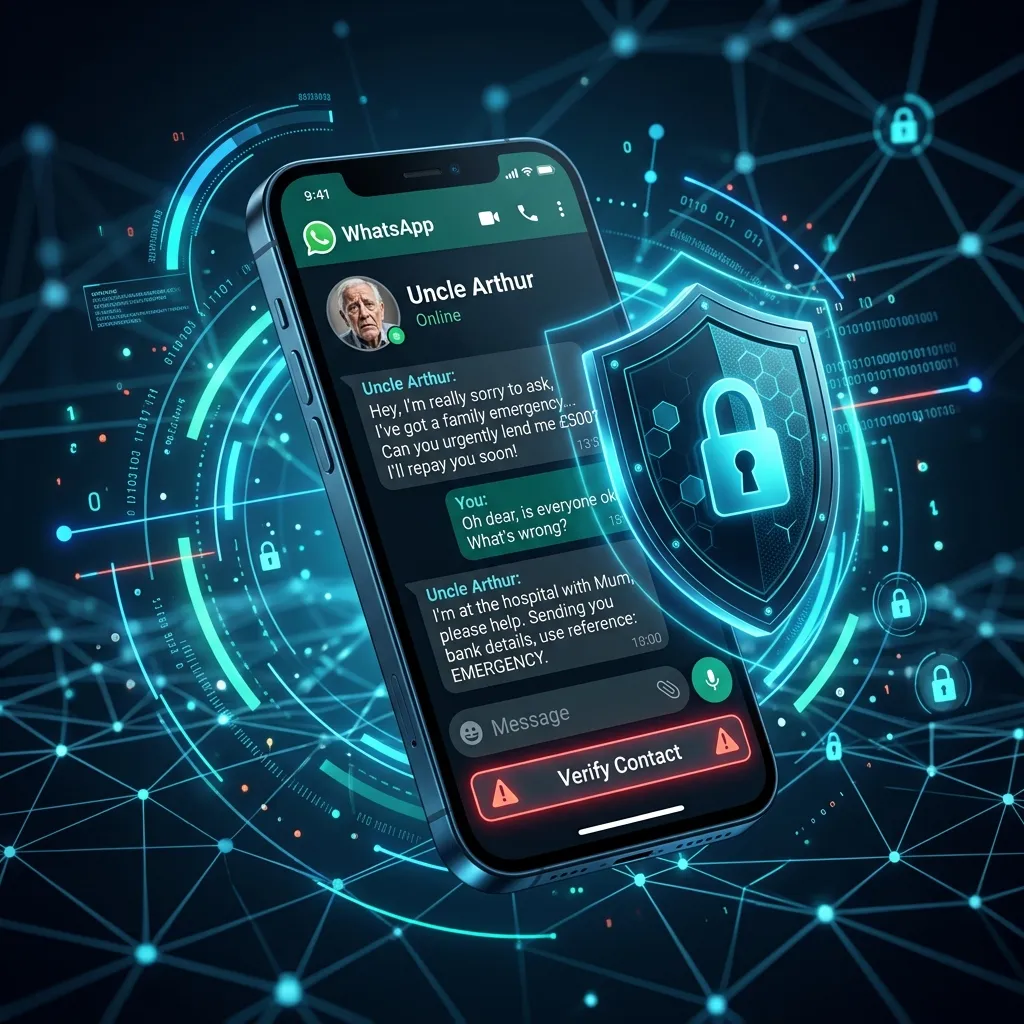
A: Yes — it's the same underlying fraud pattern (impersonating trusted leadership to request an urgent payment) delivered through a different, more convincing channel. See our breakdown of WhatsApp impersonation scams for the closely related pattern.
How iTechFixr Can Help
Our Human Firewall training now includes voice-based social engineering scenarios alongside email and WhatsApp, so your team recognises this pattern regardless of which channel it arrives through.
Need Help With This?
Talk to Hardik directly about your organisation's cybersecurity needs — get a tailored response within 24 hours.