What Is a VAPT Retest and Why Is It Necessary After Fixing Vulnerabilities?
Fixing a vulnerability isn't the same as confirming it's actually fixed — here's what a VAPT retest checks and why skipping it is a common, costly mistake.

💡 In Simple Terms (For Beginners)
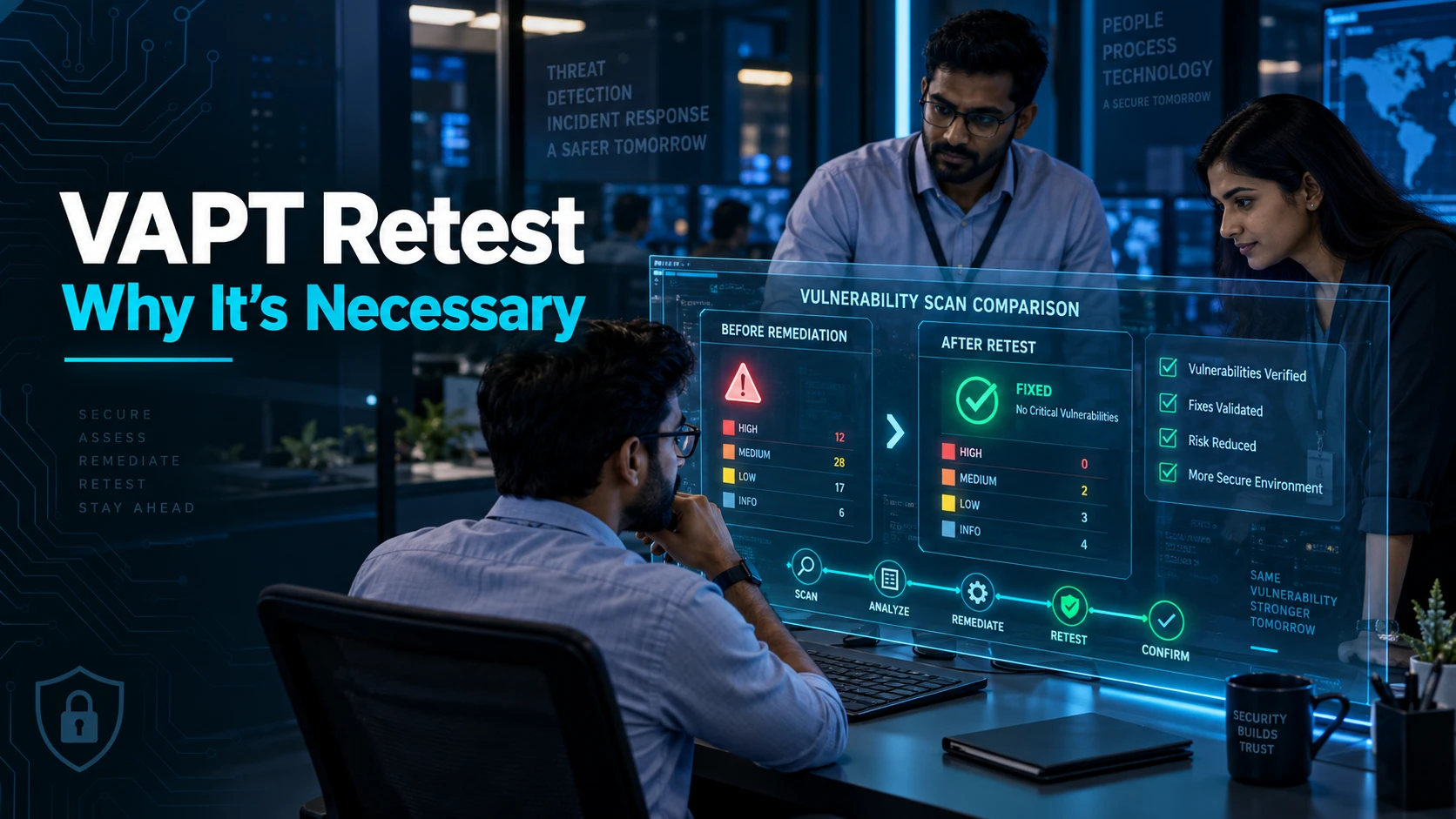
A VAPT retest means the security testers come back after you've fixed the issues they found, to confirm the fixes actually worked — rather than just trusting your own report that everything's patched.
- A retest verifies fixes independently — it doesn't just take a development team's word that something is patched.
- Fixes applied under time pressure are the most likely to be incomplete or introduce a new gap.
- Many vendors bundle one free retest into the original engagement — check this before assuming it's a separate cost.
ETHICAL HACKING · September 5, 2026 · 6 min read · By Hardik Patel
What is a VAPT retest and why is it necessary after fixing vulnerabilities? A VAPT retest is a follow-up assessment that independently verifies previously identified vulnerabilities are actually resolved — necessary because a fix applied internally isn't confirmed secure until someone outside the fixing team checks it.
What a Retest Actually Checks
A retest re-runs the specific tests that originally found each vulnerability, confirming the fix closes the issue without introducing a new one — it's narrower and faster than the original full assessment, focused specifically on the findings that were flagged.
This matters because a fix that looks complete from the development side can still leave the underlying exposure open — a patched endpoint that still has an unpatched variant, a permission fix that didn't cover every access path, or a configuration change that didn't survive a deployment.
Why Fixes Under Pressure Are the Riskiest
Fixes applied quickly under deadline pressure — especially right before an audit deadline or compliance review — are the most likely to be incomplete, because the priority becomes closing the finding fast rather than verifying the fix holds up under the same conditions that exposed it originally.
This is exactly the scenario a retest is designed to catch: it removes the assumption that "we fixed it" is the same as "it's actually fixed," verified independently rather than self-reported.
Is a Retest a Separate Cost?
Many VAPT providers include one retest within the original engagement scope, typically within a defined window (30-90 days) after the initial report — worth confirming this explicitly before assuming an additional retest is a separate line-item cost.
Key Takeaways
- A retest independently verifies fixes rather than trusting a self-reported "it's patched."
- Fixes rushed under deadline pressure are the most likely to be incomplete.
- Check whether a retest is included in your original VAPT scope before assuming it costs extra.
Frequently Asked Questions
Q: Is a retest the same as a full new VAPT audit?
A: No — a retest is narrower, focused specifically on re-checking previously identified findings, not a full re-assessment of the entire system from scratch.
Q: How soon after fixing issues should a retest happen?
A: As soon as the fixes are deployed to the environment that was tested — waiting too long risks the environment changing further, which can complicate confirming whether the original fix is what's actually in place.
How iTechFixr Can Help
Our VAPT engagements include a defined retest window as standard — we don't consider a finding closed until it's independently verified, not just reported as fixed.


Need Help With This?
Talk to Hardik directly about your organisation's cybersecurity needs — get a tailored response within 24 hours.